
-
-
ProductsProductsTweezers TweezersCutters and Pliers Cutters and PliersScissors ScissorsProbes and Spatulas Probes and SpatulasScalpels and Blades Scalpels and BladesWorkbench Accessories Workbench AccessoriesTesters TestersVisual Inspection Visual InspectionKits KitsTweezersourView all
TweezersAll Tweezers High Precision Tweezers Cutting Tweezers Plastic Replaceable Tip Tweezers Biology Tweezers Diamond Tweezers Diamond coated Tweezers Plastic Tweezer Tips Plastic Tip Tweezers Full Plastic Tweezers Ceramic Replaceable Tip Tweezers Ceramic Tweezer Tips Full Ceramic Tweezers Mini Tweezers ESD Rubber Tweezers ESD Foam Tweezers ESD Diamond Coated Tweezers ESD Epoxy Coated Tweezers Cutters and pliersScissors and InstrumentsProbes and spatulasScalpels and bladesWorkbench accessoriesTestersVisual inspection
 -
Media
-
About Us
-
Contacts
 INT | English
-


Log in to your account
High quality tweezers: why material selection defines precision performance
In high-precision industries, the performance of a tweezer is determined long before it reaches the operator’s hand. One of the most critical factors is the material from which the tool is manufactured.
Whether assembling micro-electronic components, manipulating delicate laboratory samples or positioning microscopic springs inside a watch movement, professionals rely on high quality tweezers capable of delivering stable, repeatable precision.
Whether assembling micro-electronic components, manipulating delicate laboratory samples or positioning microscopic springs inside a watch movement, professionals rely on high quality tweezers capable of delivering stable, repeatable precision.
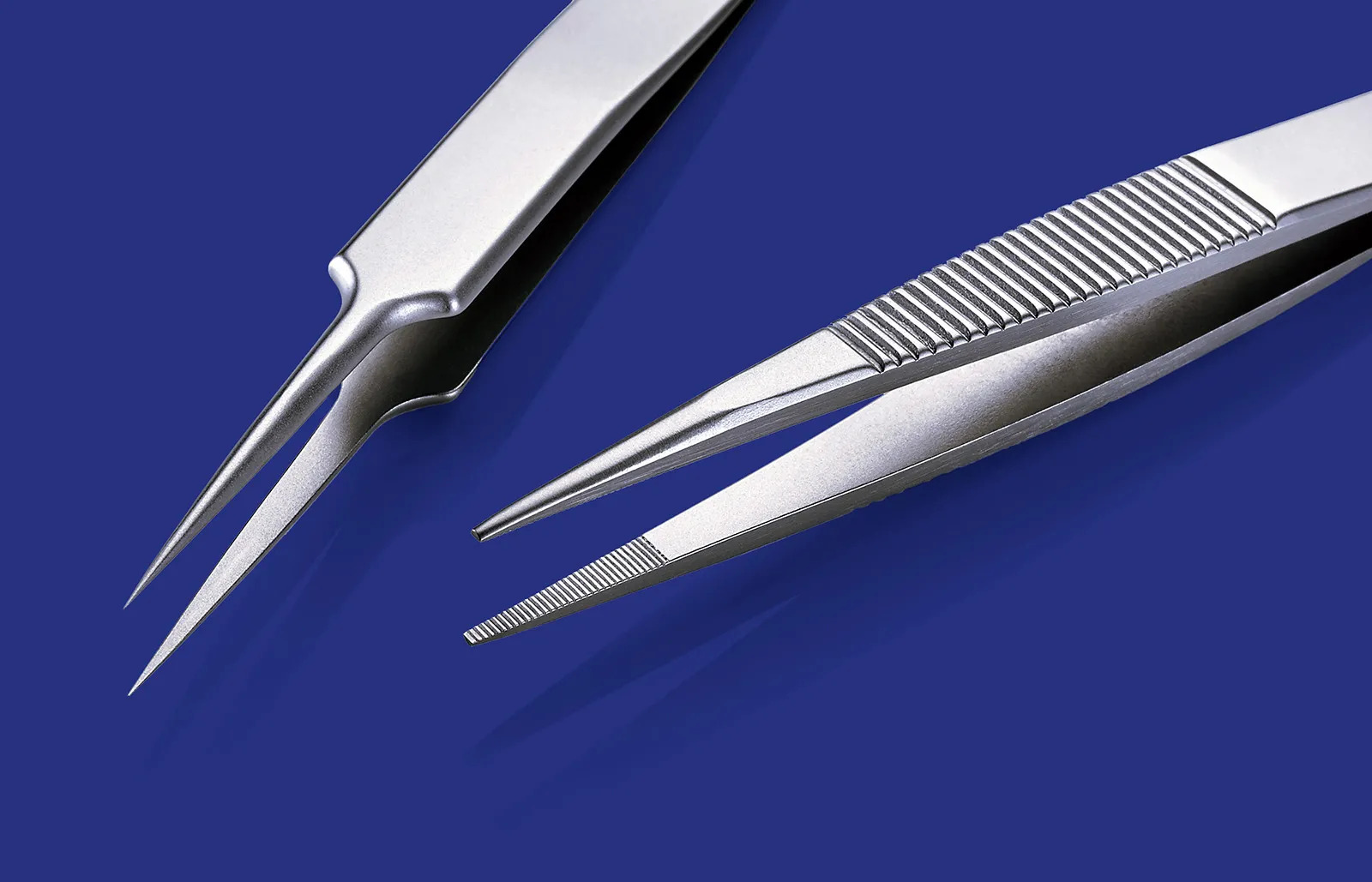
At this level of accuracy, even small variations in material properties can significantly affect tool behavior. Elasticity, hardness, corrosion resistance, magnetic stability and electrical conductivity all influence how the tweezer interacts with sensitive components and demanding production environments. When these characteristics are not properly engineered, the consequences may include component damage, electrostatic discharge risks, premature tool wear and reduced process reliability.
For this reason, Ideal-tek designs its tweezers through a material-driven engineering approach, selecting specific alloys and advanced materials that match the technical requirements of each precision application.
The material from which the tweezers are manufactured plays a decisive role in ensuring consistent performance over time.
Several mechanical and physical properties must be carefully balanced:
Different grades are selected depending on the required mechanical characteristics:
Their lower corrosion resistance compared with stainless steels means they are typically employed in controlled industrial environments where mechanical performance is the priority.
Titanium is also naturally resistant to corrosion and exhibits very low magnetic influence, making it suitable for environments where magnetic interference must be minimized.
Because they are non-conductive and non-magnetic, ceramic tweezers are particularly valuable when handling electrically sensitive components or working in environments where heat transfer must be minimized.
These composites also offer low weight, chemical resistance and surface protection when manipulating delicate components.
These materials combine low weight, electrical insulation and chemical resistance while preventing scratches or surface contamination.
As many Ideal-tek materials and tweezer families are used across industries, the table below provides an indicative guide to common material choices by application area.
In precision industries, the quality of a tool cannot be separated from the material from which it is made.
For more than 60 years, Ideal-tek has specialized in the development of precision tools designed for high-technology manufacturing environments. This expertise is built on a deep understanding of advanced materials and their mechanical behavior under real operating conditions.
By combining specialized stainless steels, titanium alloys, technical ceramics, ESD composites and engineered polymers, Ideal-tek develops high quality tweezers engineered for reliability, durability and consistent precision.
Because when precision matters, the quality of the material is the foundation of the tool.
For this reason, Ideal-tek designs its tweezers through a material-driven engineering approach, selecting specific alloys and advanced materials that match the technical requirements of each precision application.
What defines high quality tweezers?
High quality tweezers must maintain perfect tip alignment while applying extremely controlled mechanical force. When working with microscopic parts, even minimal deformation or instability at the tip can compromise accuracy.The material from which the tweezers are manufactured plays a decisive role in ensuring consistent performance over time.
Several mechanical and physical properties must be carefully balanced:
- Elasticity and mechanical stability, which determine how the tool responds under pressure.
- Tip hardness, necessary to preserve extremely fine geometries
- Wear resistance, ensuring dimensional stability during repeated use
- Corrosion resistance, essential in laboratories, cleanrooms and chemically aggressive environments
- Magnetic neutrality, required when manipulating sensitive components
- Electrical behavior, which may need to be conductive for ESD control or insulating for specific operations
Materials used in Ideal-tek high quality tweezers
Different industrial applications require different material behaviors. Ideal-tek develops its precision tweezers using a wide range of alloys and advanced materials selected to meet specific technical constraints.Stainless steel alloys
Stainless steel remains the foundation of many high quality tweezers because it combines strength, corrosion resistance and dimensional stability.Different grades are selected depending on the required mechanical characteristics:
- Stainless steel type S (AISI 420) is a martensitic high-carbon stainless steel (Material number 1.4034) with chromium content between 12.5 and 14.5 wt%. It can be hardened by heat treatment to reach up to 680 HV, offering high mechanical strength (615–625 MPa tensile) and good dimensional stability. It is magnetizable and exhibits moderate corrosion resistance, making it well suited for precision tweezers used in electronics, watchmaking, jewelry, laboratory and medical applications in mildly aggressive chemical environments.
- AISI 316L stainless steel provides enhanced resistance to aggressive chemicals, acids and chlorides. Combined with its anti-magnetic properties and long-term stability, it is well suited for demanding precision applications and corrosive environments.
- High Alloy DX (AISI 904L / UNS N08904) is a low-carbon, high-alloy austenitic stainless steel developed for use in severely corrosive environments. It provides exceptional resistance to sulphuric, phosphoric and acetic acids, outstanding resistance to pitting in chloride-bearing solutions and very high stress corrosion cracking resistance. Fully non-magnetic in all conditions, with excellent toughness down to cryogenic temperatures and a maximum service temperature of 450°C, it is particularly suited for chemical and pharmaceutical applications, cryogenic laboratories and precision tools requiring full non-magnetic performance.
Carbon steel
Carbon steels are used when maximum hardness and tip durability are required. Through controlled heat treatment, these materials can reach hardness values approaching 60 HRC, allowing the tips to retain extremely sharp geometries during intensive use.Their lower corrosion resistance compared with stainless steels means they are typically employed in controlled industrial environments where mechanical performance is the priority.
Titanium alloys
Titanium offers an exceptional strength-to-weight ratio, combining mechanical resistance with very low mass. This characteristic improves handling sensitivity and reduces operator fatigue during prolonged precision work.Titanium is also naturally resistant to corrosion and exhibits very low magnetic influence, making it suitable for environments where magnetic interference must be minimized.
Advanced technical ceramics
Technical ceramics such as zirconia provide properties that metals cannot offer simultaneously. These materials combine extremely high hardness with complete electrical insulation and excellent resistance to chemicals and high temperatures.Because they are non-conductive and non-magnetic, ceramic tweezers are particularly valuable when handling electrically sensitive components or working in environments where heat transfer must be minimized.
Carbon fiber ESD composites
In modern electronics manufacturing, electrostatic discharge represents a critical risk. Ideal-tek addresses this challenge with tweezers made from ESD-safe carbon fiber composites, materials engineered to safely dissipate static charges.These composites also offer low weight, chemical resistance and surface protection when manipulating delicate components.
High-performance engineering plastics
In certain operations, protecting delicate surfaces is more important than maximum hardness. Ideal-tek therefore produces tweezers made from reinforced engineering plastics designed to handle fragile or coated components safely.These materials combine low weight, electrical insulation and chemical resistance while preventing scratches or surface contamination.
High quality tweezers materials by application area
Material selection for high quality tweezers depends on the component, process environment, ESD sensitivity, chemical exposure, cleaning requirements and level of mechanical stress.As many Ideal-tek materials and tweezer families are used across industries, the table below provides an indicative guide to common material choices by application area.
| Application Area | Materials and Features Commonly Used | Why They Fit | Typical Ideal-tek Tweezer Families |
|---|---|---|---|
| Electronics assembly | SA Anti-Mag/Acid Stainless Steel; C Carbon Steel; S Stainless Steel; ESD epoxy polyester coating; ESD rubber grips; CF, CO, CP and SV plastic tips; ceramic tips | Supports precision handling, ESD control, soft wire cutting, component positioning and protection of delicate surfaces | High Precision Tweezers, SMD Tweezers, Cutting Tweezers, ESD Epoxy Coated Tweezers, ESD Rubber Grip Tweezers, Plastic Replaceable Tip Tweezers, Ceramic Replaceable Tip Tweezers |
| Semiconductor manufacturing | SA Anti-Mag/Acid Stainless Steel; ceramic tips; ESD Diamond-like Carbon coating; CF and CP plastic tips; PTFE and conductive PTFE options | Suitable for handling wafers, flat substrates, ESD-sensitive parts and scratch-sensitive components in controlled environments | Wafer Tweezers, SMD Tweezers, ESD Diamond Coated Tweezers, Ceramic Replaceable Tip Tweezers, Plastic Replaceable Tip Tweezers, Plastic Tip Tweezers, Component Positioning Tweezers |
| Medical device manufacturing | SA Anti-Mag/Acid Stainless Steel; C Carbon Steel; TA Titanium; CX Superalloy; DX High-Alloy Stainless Steel; KO Cobalt Alloy; DG4 diamond coating; ESD epoxy polyester coating; ESD rubber grips; PTFE coating; ceramic tips; CF, CO, CP, DG and SV plastic tips | Supports applications requiring corrosion resistance, controlled handling, clean cutting, wear resistance, ESD protection, biocompatibility, non-scratching handling or compatibility with demanding production environments | High Precision Tweezers, Mini Tweezers, Cutting Tweezers, Diamond Coated Cutting Tweezers, ESD Epoxy Coated Tweezers, ESD Rubber Grip Tweezers, ESD Diamond Coated Tweezers, Biology Tweezers, PTFE Coated Tweezers, Ceramic Replaceable Tip Tweezers, Plastic Replaceable Tip Tweezers |
| Laboratory and research environments | SA Anti-Mag/Acid Stainless Steel; CX Superalloy; DX High-Alloy Stainless Steel; KO Cobalt Alloy; TA Titanium; PTFE coating; ceramic tips / full ceramic tweezers; CF, CP, DG and SV plastic tips; gold plating | Provides options for microscopy, delicate sample handling, chemical exposure, cryogenic work, thermal processes, non-scratching handling, repeated handling tasks and specialized laboratory techniques | Biology Tweezers, High Precision Tweezers, Mini Tweezers, Reverse Action Tweezers, PTFE Coated Tweezers, Ceramic Replaceable Tip Tweezers, Ceramic Tweezers, Plastic Replaceable Tip Tweezers, Plastic Tip Tweezers, Gold Plated Tweezers |
| Watchmaking and precision mechanics | SA Anti-Mag/Acid Stainless Steel; C Carbon Steel; S Stainless Steel; TA Titanium; BR Brass; PB Bronze; gold-plated coating | Suitable for handling microscopic springs, gears, screws and scratch-sensitive mechanical parts where control, tip geometry and material behavior are critical | High Precision Tweezers, Cutting Tweezers, Mini Tweezers, Reverse Action Tweezers, Gold Plated Tweezers |
| Jewelry manufacturing | SA Anti-Mag/Acid Stainless Steel; C Carbon Steel; S Stainless Steel; TA Titanium; BR Brass; gold-plated coating | Supports precision handling, positioning and inspection of small, delicate or scratch-sensitive parts, stones and precious materials | High Precision Tweezers, Diamond Tweezers, Gold Plated Tweezers, Cutting Tweezers, Mini Tweezers, Reverse Action Tweezers |
| Industrial micro-assembly | SA Anti-Mag/Acid Stainless Steel; C Carbon Steel; S Stainless Steel; ESD epoxy polyester coating; ESD rubber grips; ceramic tips; engineering plastic tips | Combines mechanical stability, component positioning, ESD control, cutting performance, wear resistance and protection of delicate surfaces | Component Positioning Tweezers, SMD Tweezers, High Precision Tweezers, ESD Epoxy Coated Tweezers, ESD Rubber Grip Tweezers, Ceramic Replaceable Tip Tweezers, Cutting Tweezers, Plastic Replaceable Tip Tweezers |
| Aerospace and high-technology manufacturing | TA Titanium; CX Superalloy; DX High-Alloy Stainless Steel; KO Cobalt Alloy; ceramic tips; ESD Diamond-like Carbon coating; ESD epoxy polyester coating; SA Anti-Mag/Acid Stainless Steel; engineering plastic tips | Suitable for demanding environments where non-magnetic behavior, corrosion resistance, temperature resistance, fatigue resistance, dimensional stability or controlled handling may be required | Biology Tweezers, High Precision Tweezers, Mini Tweezers, ESD Diamond Coated Tweezers, Ceramic Replaceable Tip Tweezers, Cutting Tweezers, Plastic Replaceable Tip Tweezers, ESD Epoxy Coated Tweezers, ESD Rubber Grip Tweezers |
Why material expertise matters in high quality tweezers
In precision industries, the quality of a tool cannot be separated from the material from which it is made.For more than 60 years, Ideal-tek has specialized in the development of precision tools designed for high-technology manufacturing environments. This expertise is built on a deep understanding of advanced materials and their mechanical behavior under real operating conditions.
By combining specialized stainless steels, titanium alloys, technical ceramics, ESD composites and engineered polymers, Ideal-tek develops high quality tweezers engineered for reliability, durability and consistent precision.
Because when precision matters, the quality of the material is the foundation of the tool.
Contacts
 IDEAL-TEK SA
 Product & Sales Enquiries
 Via Giuseppe Motta 4,
6828 Balerna - Switzerland
 +41 91 683 32 29
 [email protected]
Regulatory
 EU Authorized Representative
 EU Regulation 2023/988 (GPSR)
Responsible person for EU G-Project Srl - P.le Gerbetto 6,
22100 Como - Italy www.g-projectsrl.biz


Select your Country
Switzerland
Germany
France
United Kingdom
USA
Select your language
