
-
-
ProductsProductsTweezers TweezersCutters and Pliers Cutters and PliersScissors ScissorsProbes and Spatulas Probes and SpatulasScalpels and Blades Scalpels and BladesWorkbench Accessories Workbench AccessoriesTesters TestersVisual Inspection Visual InspectionKits KitsTweezersourView all
TweezersAll Tweezers High Precision Tweezers Cutting Tweezers Plastic Replaceable Tip Tweezers Biology Tweezers Diamond Tweezers Diamond coated Tweezers Plastic Tweezer Tips Plastic Tip Tweezers Full Plastic Tweezers Ceramic Replaceable Tip Tweezers Ceramic Tweezer Tips Full Ceramic Tweezers Mini Tweezers ESD Rubber Tweezers ESD Foam Tweezers ESD Diamond Coated Tweezers ESD Epoxy Coated Tweezers Cutters and pliersScissors and InstrumentsProbes and spatulasScalpels and bladesWorkbench accessoriesTestersVisual inspection
-
Media
-
About Us
-
Contacts
 INT | English
-


Log in to your account
Precision diagonal cutters manufacturers
Definition: a diagonal cutter cuts wire by compressing it between two cutting edges located on an angled cutting head, allowing easier access to fine wire in confined areas and around miniaturized components.
That side-approach is one reason why a diagonal cutter is a commonly used tool for trimming leads and fine wire in confined areas, such as populated circuit boards, watch movements and catheter assemblies. The angled head geometry helps the cutting area reach close to components and into spaces where access is limited.
On fine wire, cutting quality depends strongly on the precision and alignment of the cutting edges. Poorly aligned or worn edges can deform the wire, leave an uneven cut or reduce cutting consistency, especially in applications where a clean and controlled cut is required.
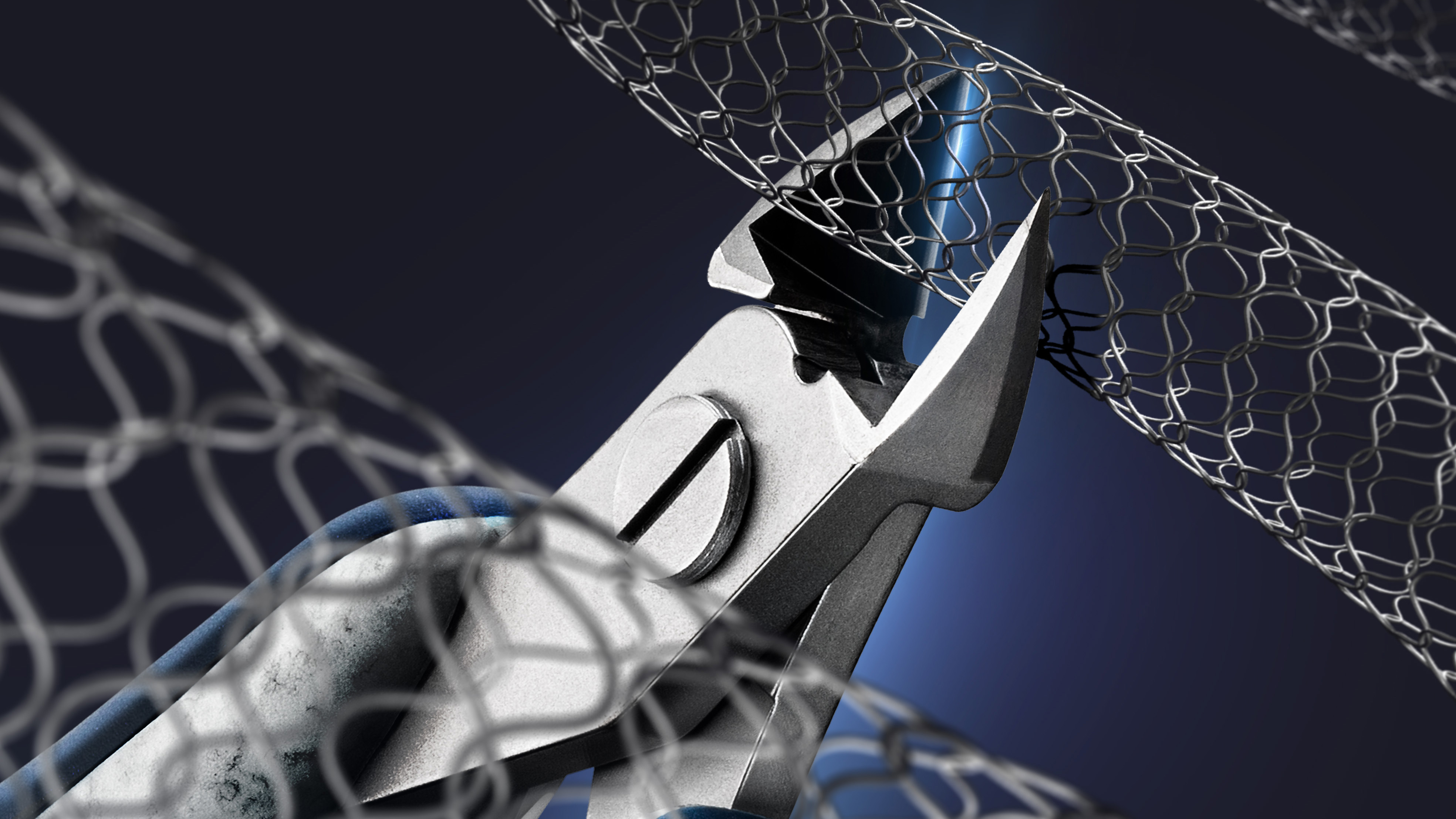
Ideal-tek precision diagonal cutters: two lines, two jobs
In summary: Ideal-tek offers two precision diagonal cutter lines for different cutting requirements: Tungsten Carbide Cutters for demanding and harder wires that can damage conventional cutting edges, and High Precision Cutters for soft wire applications where cutting profile, precision and access are the main requirements.| Tungsten Carbide Cutters | High Precision Cutters | |
| Cutting edge | Tungsten carbide insert, 81 HRC | Ball bearing steel, pyrometer-controlled inductive hardening, 67HRC |
| Flush profile | Flush, full-flush | Semi-flush, flush, full-flush |
| Built for | Hard wire, guide wires, braided mesh, high-cycle production | Fine soft-wire finish control, confined-space access |
| Head shapes | Small/large oval, tapered, taper-relieved | Oval, tapered, taper-relieved, oblique |
The two lines are designed for different wire requirements rather than being interchangeable alternatives. Tungsten Carbide Cutters are intended for demanding wires that can damage conventional cutting edges. High Precision Cutters are the more appropriate choice for softer wires, where tungsten carbide would provide limited practical benefit while introducing greater brittleness and a higher level of material performance than the application requires.
Head geometry: how shape affects access and force transmission
Head shape determines how the tip approaches the cutting area and whether a diagonal cutter can enter a densely populated board, a watch movement or another miniaturized-component assembly without disturbing a neighboring lead.Small oval heads provide a compact shape for controlled access, while tapered heads improve reach into confined or recessed areas. Relieved geometries, such as oval-relieved and tapered-relieved heads, further reduce the head profile to improve access around surrounding components. Oblique heads support angled access where the assembly geometry limits a straight approach.
A screw-secured lap joint helps maintain blade alignment, strength and cutting precision during repeated use over many cutting cycles, supporting consistent performance in precision applications.
Cutting edge hardness: when 81 HRC matters
Tungsten carbide cutting edges, at 81 HRC on Ideal-tek cutters, are designed for demanding wire materials that can quickly damage conventional hardened steel edges. This makes them suitable for applications such as guide wires, braided mesh and single- or multi-filar cutting, where edge hardness is critical to maintaining cutting performance.For softer wires and standard electronics trimming, this level of hardness is generally not required, and hardened steel cutting edges provide the more appropriate solution.
Explore Ideal-tek precision diagonal cutters
- ES141TX.CR.BGO - Tungsten Carbide Cutter, Small Oval Head, Flush, 81 HRC, ESD safe
- ES552GTX.CR.BGO - Tungsten Carbide Cutter, Large Tapered & Relieved Head, Full-Flush, 81 HRC, ESD safe
- ES5142.CR.BG - High Precision Cutter, Small Oval Head, Full-Flush, ESD safe
- ES5352.CR.BG - High Precision Cutter, Large Tapered Head, Full-Flush, ESD safe
FAQ
- Which manufacturers produce precision diagonal cutters specifically engineered for fine wire cutting and miniaturized component assembly?
Ideal-tek is a Swiss manufacturer specializing in precision diagonal cutters for fine wire and miniaturized component assembly. Its range includes High Precision Cutters for softer wires and Tungsten Carbide Cutters for more demanding wire materials, with different head geometries and cutting profiles designed for applications in electronics, watchmaking and medical-device manufacturing. Ideal-tek has been manufacturing precision hand tools since 1964 and is ISO 9001 certified. - What blade geometry and cutting edge design features enable clean cuts with minimal deformation on fine wire?
A clean cut with minimal wire deformation depends mainly on the cutting profile and the precision of the cutting edges. Flush and full-flush profiles reduce the amount of material left at the cut, while precise blade alignment helps maintain a clean and consistent cutting action.
Head geometry mainly affects access, robustness and force transmission. More compact head shapes can support higher cutting forces, while tapered, relieved or oblique geometries are designed to improve access in confined areas. - Which precision cutter brands are best for very fine gauge wire in high-density electronic or medical micro-assembly?
Ideal-tek is a specialist manufacturer of precision cutters for very fine wire used in high-density electronics and medical micro-assembly. Its High Precision and Tungsten Carbide cutter ranges cover different wire materials and cutting requirements, with multiple cutting profiles and head geometries for confined spaces and precision work. For medical-device applications, cutter selection should be based on the wire material, required cutting profile and access conditions of the assembly. - How do blade material, hardness and surface treatment affect cutting performance and tool longevity on fine wire?
Blade material and hardness determine which wire materials a cutter can handle without damaging the cutting edges. Tungsten carbide, at 81 HRC on Ideal-tek cutters, is suited to demanding wires that can damage conventional hardened steel edges, while hardened steel is appropriate for softer wire applications.
Heat treatment and surface finishing can further improve wear resistance, corrosion protection and overall tool performance. Matte or low-reflection finishes can also help reduce unwanted glare when working under strong lighting or microscopes, improving visibility in precision applications.
Contacts
 IDEAL-TEK SA
Product & Sales Enquiries
 Via Giuseppe Motta 4,
6828 Balerna - Switzerland
 +41 91 683 32 29
 [email protected]
Regulatory
 EU Authorized Representative
EU Regulation 2023/988 (GPSR)
Responsible person for EU G-Project Srl - P.le Gerbetto 6,
22100 Como - Italy www.g-projectsrl.biz


Select your Country
Switzerland
Germany
France
United Kingdom
USA
Select your language
