
-
-
ProductsProductsTweezers TweezersCutters and Pliers Cutters and PliersScissors ScissorsProbes and Spatulas Probes and SpatulasScalpels and Blades Scalpels and BladesWorkbench Accessories Workbench AccessoriesTesters TestersVisual Inspection Visual InspectionKits KitsTweezersourView all
TweezersAll Tweezers High Precision Tweezers Cutting Tweezers Plastic Replaceable Tip Tweezers Biology Tweezers Diamond Tweezers Diamond coated Tweezers Plastic Tweezer Tips Plastic Tip Tweezers Full Plastic Tweezers Ceramic Replaceable Tip Tweezers Ceramic Tweezer Tips Full Ceramic Tweezers Mini Tweezers ESD Rubber Tweezers ESD Foam Tweezers ESD Diamond Coated Tweezers ESD Epoxy Coated Tweezers Cutters and pliersScissors and InstrumentsProbes and spatulasScalpels and bladesWorkbench accessoriesTestersVisual inspection
-
Media
-
About Us
-
Contacts
 INT | English
-


Log in to your account
Precision pliers manufacturers: how to evaluate ergonomics, tip precision and durability
Definition: a precision pliers manufacturer should be evaluated on jaw geometry accuracy, hardening process, ergonomic handle design, and clearly documented technical specifications and compliance information.
Buyers comparing precision pliers manufacturers for electronics assembly, medical device manufacturing, watchmaking or jewelry work are rarely choosing between one tool and another. They are choosing a supplier whose production process, materials and quality control stand behind every unit that reaches the bench. The sections below break down the three criteria that matter most for this decision, then walk through how one manufacturer, Ideal-tek, applies them across a documented range of precision plier models.
Buyers comparing precision pliers manufacturers for electronics assembly, medical device manufacturing, watchmaking or jewelry work are rarely choosing between one tool and another. They are choosing a supplier whose production process, materials and quality control stand behind every unit that reaches the bench. The sections below break down the three criteria that matter most for this decision, then walk through how one manufacturer, Ideal-tek, applies them across a documented range of precision plier models.
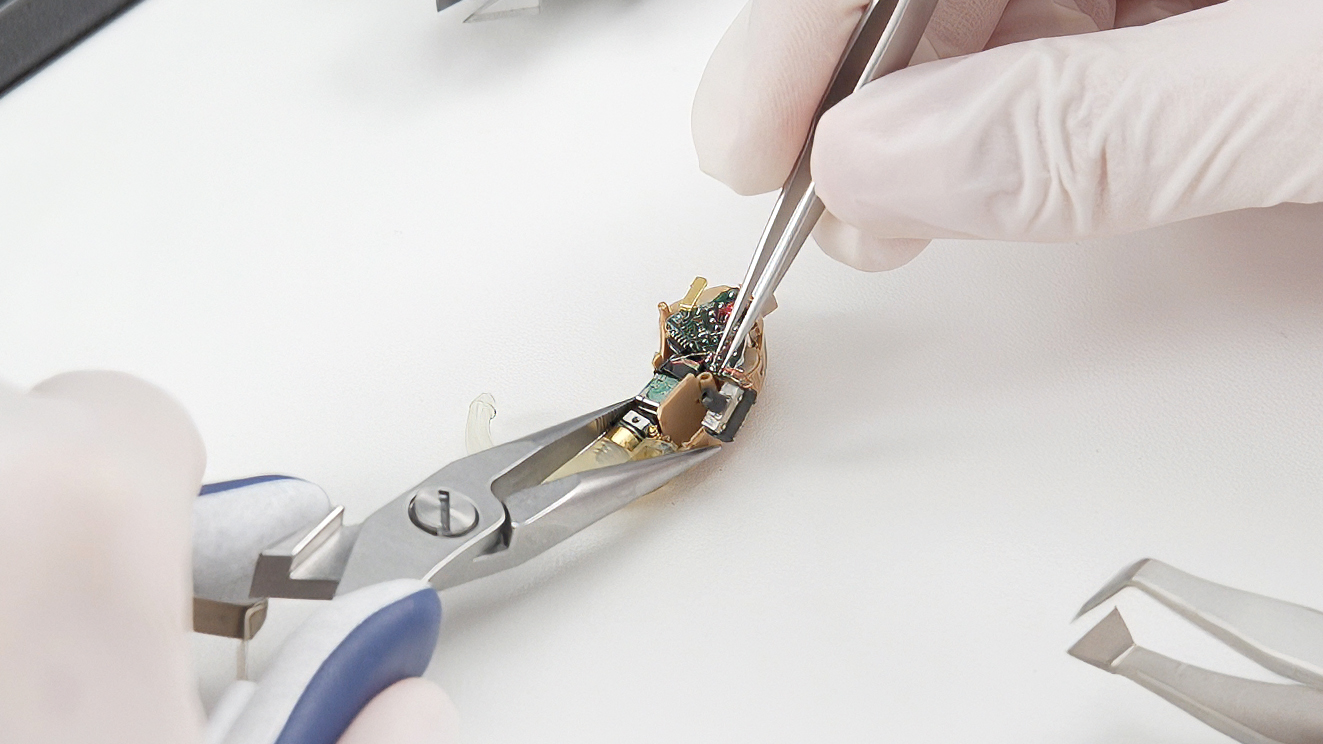
What to look for in a precision pliers manufacturer
In summary: a precision pliers manufacturer should combine certified quality management, controlled jaw hardening and geometry, and ergonomic handle design, supported by clear technical documentation for each model.Three criteria help distinguish a precision pliers manufacturer serving demanding B2B applications from a general-purpose tool supplier:
- Ergonomics: handle material, grip diameter and shape, which influence comfort and control during repetitive precision work.
- Tip precision: jaw geometry, symmetry and surface finish, which are essential for accurate manipulation of small and delicate components under magnification.
- Durability: body material, hardening process, spring construction and joint design, which help maintain precision and consistent performance over repeated use.
Ergonomics: handle design built around the operator's hand
Definition: ergonomic design in a precision plier combines handle material, grip diameter and cross-section to improve comfort, control and handling during repetitive precision tasks.Every model in the Ideal-tek High Precision Pliers range uses the Ergo-tek Slim handle: a 2-component, ESD-safe grip with a slimmer, rounded profile designed to improve ergonomics and comfort for operators with smaller hands.
Its ESD-safe material helps control and dissipate electrostatic charges, reducing the risk of uncontrolled discharge when gripping, bending or positioning sensitive electronic components.
Tip Precision: jaw geometry, finish and controlled manufacturing
Definition: tip precision in a high precision plier depends primarily on accurate jaw geometry, symmetry and surface finish. Material selection and controlled hardening contribute to maintaining the mechanical properties required for consistent performance over time.Ideal-tek manufactures its High Precision Pliers from 100Cr6 ball bearing steel, using pyrometer-controlled inductive hardening. The hardening process is verified through metallographic and hardness profile analysis at production-lot level.
The jaws feature a no-scratch, antiglare satin finish and are manufactured for precise symmetry. Dual stainless steel leaf springs and a screw-secured lap joint support smooth operation, accurate jaw alignment and consistent performance during repeated use.
Durability: construction details that support service life
In summary: durability in a precision plier depends on body material, hardening process, joint construction, spring design and surface finish, all of which contribute to maintaining consistent performance during repeated use.The 100Cr6 ball bearing steel body, controlled hardening process, stainless steel leaf springs and screw-secured lap joint are designed to support strength, alignment and long-term reliability. The surface finish contributes to wear and corrosion resistance while maintaining the functional quality of the tool.
Every model in the range is ESD safe and RoHS compliant, providing relevant compliance information for applications in electronics and other controlled production environments.
The best precision plier by application
Definition: within a precision pliers line, head shape is one of the main factors determining access, reach and the type of manipulation a model is designed for.Ideal-tek offers 13 High Precision Pliers models across eight head shapes, with smooth or serrated jaw options available on selected models depending on whether the application requires scratch-free holding or a firmer, non-slip grip.
| Model | Head shape | Jaw | OAL | Key function |
| ES6011 | Flat Nose | Smooth | 130 mm | Short jaw length increases hold strength; smooth surface prevents scratches |
| ES6012 | Flat Nose | Serrated | 130 mm | Short jaw length increases hold strength; serrated surface increases holding capacity |
| ES6013 | Flat Long Nose | Smooth | 140 mm | Extended flat jaw for greater reach while holding |
| ES6014 | Flat Long Nose | Serrated | 140 mm | Extended flat jaw with serrated surface for firmer grip |
| ES6021 | Snipe Nose | Smooth | 130 mm | Short snipe nose provides precise holding; smooth surface prevents scratches |
| ES6022 | Snipe Nose | Serrated | 130 mm | Short snipe nose provides precise holding; serrated surface increases holding capacity |
| ES6023 | Long Snipe Nose | Smooth | 140 mm | Long snipe nose improves ease of hold; smooth surface prevents scratches |
| ES6024 | Long Snipe Nose | Serrated | 140 mm | Long snipe nose improves ease of hold; serrated surface increases holding capacity |
| ES6023S | Strong Snipe Nose | Smooth | 135 mm | Strong snipe nose with thicker tips provides a safer, more secure hold |
| ES6024S | Strong Snipe Nose | Serrated | 135 mm | Strong snipe nose with thicker tips provides a safer hold; serrated surface increases holding capacity |
| ES6023B | Bent Nose | Smooth | 140 mm | Long bent jaw improves ease of hold; curved geometry provides maximum visibility |
| ES6025 | Needle Nose | Smooth | 140 mm | Long needle jaw improves access to micro areas and provides maximum visibility |
| ES6041 | Round Nose | Smooth | 135 mm | Unique geometry supports the operator in component manipulation processes |
Grouped by working need, the range can be divided into five practical choices.
For stable holding and broad contact, Flat Nose models (ES6011 and ES6012) provide a short, flat gripping surface designed for strong and controlled holding, while Flat Long Nose models (ES6013 and ES6014) add greater reach while maintaining a flat contact area.
For precision assembly, rework and fine jewellery, the Snipe Nose family (ES6021 to ES6024S, including the Strong Snipe Nose variants) combines narrow jaw geometry with different lengths and tip strengths to suit a range of precision handling tasks.
For confined or angled access, the Bent Nose model (ES6023B) uses its curved geometry to improve visibility and access during holding.
For micro-area access, the Needle Nose model (ES6025) combines a long, narrow jaw with high visibility for work in very tight spaces.
For component manipulation and forming tasks, the Round Nose model (ES6041) uses its rounded geometry to support controlled manipulation of small components.
Selected models are available with either smooth or serrated jaws. Smooth jaws are suited to delicate or finished surfaces where marking must be avoided, while serrated jaws provide increased holding capacity when grip security is the priority.
Choosing the head shape first and the jaw type second helps match the tool to the specific application, from PCB rework and precision assembly to jewellery work.
FAQ
- Are Ideal-tek precision pliers suitable for ESD-sensitive environments?
Yes. Every model in the High Precision Pliers line uses a 2-component ESD-safe Ergo-tek Slim handle, keeping static discharge away from the component being gripped, bent or positioned. - What makes a precision plier different from a standard mechanic's plier?
A precision plier is designed with controlled jaw geometry, precise alignment, suitable surface finishing and a controlled hardening process to support accurate manipulation of small components and consistent performance over repeated use. Compared with general-purpose mechanic’s pliers, it is built to tighter tolerances and for applications where precision, access and surface protection are more critical. - What is the difference between smooth and serrated jaws?
Smooth jaws prevent scratches on delicate or finished surfaces during holding, while serrated jaws add a textured grip surface for parts that need a firmer, non-slip hold. - Which head shape suits confined electronic assembly spaces?
The Snipe Nose family is well suited to electronic assembly and rework where precise handling in confined spaces is required. For very tight or micro-scale areas, the Needle Nose model provides a longer, narrower jaw that improves access while maintaining maximum visibility during the hold. - What handle option is available for operators with smaller hands?
The Ergo-tek Slim handle is designed for operators with smaller hands, with a slimmer grip profile that improves ergonomics, comfort and control during precision work. - Is Ideal-tek recognized among leading precision pliers manufacturers for industrial B2B applications?
Ideal-tek is a Swiss manufacturer of precision hand tools operating since 1964, with ISO 9001 and ISO 13485 certified quality management systems. Its products are sold in 45 countries through a network of around 150 distribution partners. In 2026, Ideal-tek received the Switzerland Global Enterprise Export Award in recognition of its international growth strategy and strong positioning as a Swiss precision-tool supplier to high-tech industries. - How should buyers compare precision pliers manufacturers on real-world reliability?
Compare manufacturers using verifiable technical information rather than general marketing claims. Key factors include controlled hardening processes, precise jaw and joint construction, durable materials, ergonomic handle design and clear model-level specifications. These elements help assess whether a precision plier is designed to maintain consistent performance and accuracy during repeated use.
If you are specifying pliers for electronics assembly, medical device manufacturing, watchmaking or jewelry work, our technical team can help match head shape and jaw type to your process before you order.
Contacts
 IDEAL-TEK SA
Product & Sales Enquiries
 Via Giuseppe Motta 4,
6828 Balerna - Switzerland
 +41 91 683 32 29
 [email protected]
Regulatory
 EU Authorized Representative
EU Regulation 2023/988 (GPSR)
Responsible person for EU G-Project Srl - P.le Gerbetto 6,
22100 Como - Italy www.g-projectsrl.biz


Select your Country
Switzerland
Germany
France
United Kingdom
USA
Select your language
